
Crate Training a Puppy or Dog First Night | top Crying Fast (Step-by-Step Guide)
Is your puppy crying in the crate on their first night? Learn our step-by-step guide to crate training a puppy from night one — and how to stop the crying fast without stress.
PUPPY TRAINING
Pup Care and Training
5/12/20267 min read
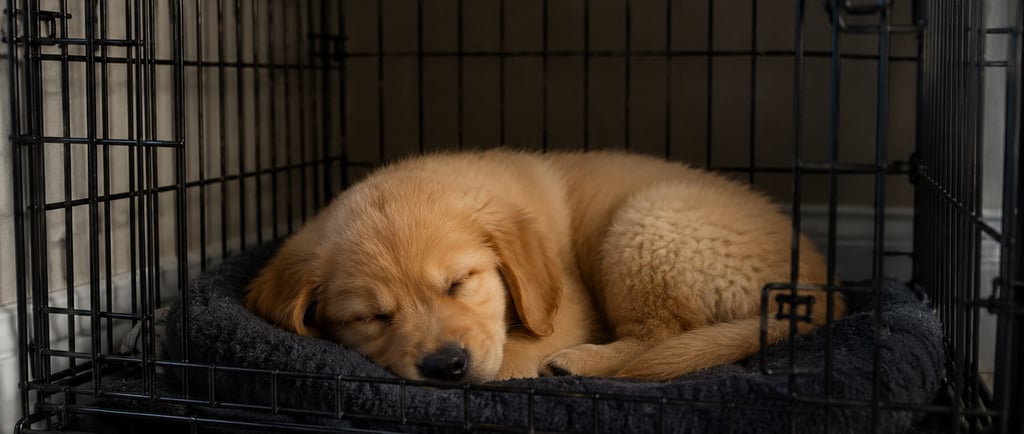
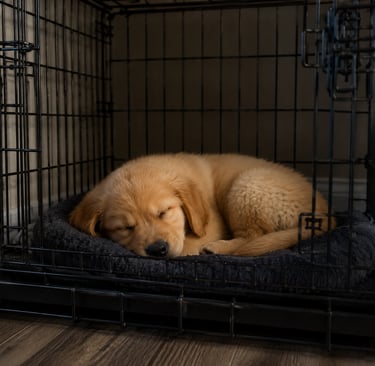
The first night with your puppy is a moment you have been waiting for weeks.. Then it finally arrives and your puppy will not stop crying in the crate.
You are exhausted your puppy is upset. You are starting to question every decision you made in the last 24 hours.
Here is what you need to hear: this is completely normal it can be. You have not ruined anything. Your puppy cries in the crate because they are scared and disoriented not because they hate the crate.
With the setup and a clear plan most puppies settle down faster than you think.
This guide will walk you through what to do from choosing the crate to handling night time crying so you and your puppy can both get some sleep.
Why crate training is worth it
Before we get into the details lets talk about why crate training's a good idea. When your puppy is crying at 2am you need to remember why you are doing this.
Crate training when done correctly is one of the things you can do for your puppy. Here is what it achieves:
1. It helps with house training. Dogs do not like to soil their sleeping area. A crate teaches your puppy to hold their bladder and tells them when it is time to go outside.
2. It prevents behavior. Puppies. Get into everything when left alone. A crate keeps them safe which means accidents and less stress for everyone.
3. It prevents separation anxiety. A puppy who learns to be alone is an confident dog.
4. It gives your puppy a space. Dogs like to have a den. A crate is like a den, where your puppy can go when they feel overwhelmed.
Choosing the right crate
Getting the right crate is important. If you get the size it can slow down the process.
The crate should be just big enough for your puppy to stand up turn around and lie down. That is it.
If you have a puppy buy a crate that is the right size for when they are grown and use a divider to make it smaller for now.
There are several types of crates:
1. Wire crates are great because they have good airflow and are easy to clean.
2. Plastic travel crates are like a den and some puppies like them.
3. Sided fabric crates are not good for puppies who chew.
For puppies a wire crate with a divider is the best choice.
Before the night: setting up the crate
What you do before bedtime determines how your puppies first night in the crate goes. Do not skip this part.
Put the crate in your bedroom at least for the few weeks. This helps your puppy feel calm because they can hear and smell you.
Make the crate cozy by putting a blanket or bed inside. If you have a blanket that smells like your puppies mom put it in the crate.
Add a toy that makes a heartbeat sound, like the Snuggle Puppy. Many owners like these toys for the few nights.
Put one of your t-shirts in the crate so your puppy can smell you.
Cover the crate with a blanket to make it darker and more like a den.
Step-by-step: crate training from night one
Step 1: introduce the crate before bedtime. Do not put your puppy in the crate for the time at night and expect them to sleep.
Leave the door open during the day. Put treats inside so your puppy goes in voluntarily.
Feed your puppy in the crate with the door open.
The goal is to make your puppy think the crate is a place.
Step 2: tire your puppy out before bed. A tired puppy sleeps better.
Play with your puppy. Run short training games using treats.
An hour before bedtime start winding things down.
Step 3: monitor your puppies water intake before bed.
Do not take away the water bowl. Limit how much your puppy drinks.
Step 4: take your puppy outside before bedtime.
Keep this trip calm and quiet.
Step 5: put your puppy in the crate with treats.
Use a command, like "crate" or "bed".
Guide your puppy in with a treat. Drop a few treats inside.
Keep your energy calm and neutral.
Step 6: handle night time waking
If your puppy cries, pause for a seconds to see if they need the toilet.
If they do take them out quietly. Return them to the crate with minimal fuss.
Should you ignore a crying puppy in the crate?
It depends on why they're crying and how you respond.
If your puppy needs the toilet take them out quietly.
If your puppy is crying because they want company wait for a pause before responding.
Do not rush in with reassurance or let them cry for a long time with no response.
Never use the crate as punishment. Never scold your puppy for crying.
Building up crate tolerance, in parallel is also important.
What you do during the day affects how well your puppy handles the crate at night.
Feed your puppy all their meals in the crate with the door closed. This is a way to help your puppy feel good about the crate. It works faster than anything else to build strong positive feelings about the crate.
Your puppy will learn to love the crate.
Practice putting your puppy in the crate for periods during the day. Put your puppy in the crate for 10 to 20 minutes while you are home and doing things. This teaches your puppy that going in the crate does not mean you are leaving. It prevents your puppy from getting scared when they go in the crate.
Gradually increase the time your puppy spends in the crate. Start with five to ten minutes, fifteen then thirty. Do this slowly so your puppy feels confident at each stage before moving to the next.
This is very important for your puppy.
Do not let your puppy follow you from room to room all day. Give your puppy some time in the crate or in a safe space. This teaches your puppy that being alone is not a deal. It helps prevent your puppy from getting separation anxiety.
How Long Will the First Night Crying Last?
Most puppies cry a lot on the second nights. They cry less on the fourth nights. Usually they settle down within one to two weeks if you follow the steps
Puppies that are than 11 weeks and get a lot of exercise and have a calm bedtime routine often sleep for four to seven hours at a time within the first week. Younger or smaller puppies need to go out often.
The two-week mark is a goal to aim for. By then most puppies think of the crate as a place to sleep. The crying at night gets much better.
Common Crate Training Mistakes to Avoid
Using a crate that's too big. A big crate does not feel like a den. Can make house training harder. Use a divider to make it smaller.
Putting your puppy in the crate without introducing it. You need to introduce the crate over a few days. Do not just put your puppy in the crate at 10pm.
Using the crate as punishment. Never do this. It can undo all the work you have done.
Leaving your puppy in the crate for long. Puppies under six months should not be in the crate for than three to four hours at a time during the day. If you leave them in the crate for long they can get anxious and frustrated.
Rushing to your puppy every time they whimper. Teach your puppy that being quiet gets a response from you. If you respond to every noise your puppy will think that noise gets attention.
Being inconsistent. If you let your puppy sleep in your bed one night and in the crate the next it can confuse them. Choose one way. Stick to it.
Final Thoughts
The night of crate training is usually not perfect. The second night is usually better. If you follow the steps and are consistent and patient most puppies will become calm and settled sleepers within two weeks.
The crate is not a place to lock your puppy away. If you do it right the crate becomes your puppies den. It is a place where they feel safe and comfortable. It takes work. It is worth it.
Your puppy will be confident and independent. They will be happy to be alone. This is a gift that will last their life. Start tonight.
Frequently Asked Questions
How long should I let my puppy cry in the crate at night?
You should not let your puppy cry for a time without checking on them. If your puppy is quiet for a seconds you can respond calmly.. If they cry for a long time you should check on them to see if they need to go to the bathroom.
Where should I put the crate on the night?
Put the crate in your bedroom close to your bed. Your puppy will feel calmer with you nearby. You can move the crate to its location later.
What size crate do I need for my puppy?
The crate should be just big enough for your puppy to stand up turn around and lie down. If the crate is too big your puppy might use one end as a bathroom and the other end as a bed. You can use a divider to make the crate smaller.
Can I put a blanket in my puppies crate?
Yes you can put a blanket or bed in the crate. It will make the crate feel cozier. If you can use a blanket that smells like your puppies littermates or a shirt you have worn. It will help your puppy feel less anxious.
How long does it take to crate train a puppy?
It depends on the puppy. Most puppies get better within one, to two weeks if you are consistent. Some puppies learn faster. Some take longer. You need to be patient and consistent.
When can I stop using the crate?
You can stop using the crate when your puppy is reliable and does not have accidents does not chew things when they are alone and is calm when you leave them alone. This is usually when they are one to two years old. Many dogs still like to use their crate as a space even after they are trained.
Contact
We're here to help with puppy questions.
© 2025. All rights reserved.