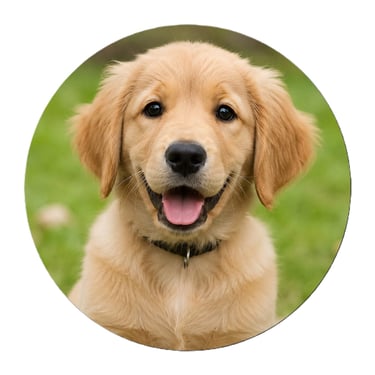
5 Hardest Commands to Teach a Dog and How to Master Them
Struggling with dog training? Discover the 5 hardest commands to teach a dog, why they're so difficult, and simple proven tips to finally get them right.
PUPPY TRAINING
Puppy Care and Training
7/7/202610 min read
Some dog commands are easy. Sit. Paw. Spin. Most dogs pick those up within a session or two and their owners feel like training geniuses.
Then there are the other commands. The ones that seem straightforward on paper but fall apart the moment you actually try to teach them. The ones that have been "almost there" for three weeks. The ones that work perfectly at home and completely disappear the moment a squirrel exists.
These five commands are the ones owners struggle with most - and for good reason. Each one asks something genuinely difficult of your dog. But with the right approach, every single one is teachable. Here's how.
1. Stay (With Real Duration and Distance)
Why it's hard: Almost every dog can sit for two seconds when you're standing right in front of them holding a treat. That's not stay - that's just a very slow sit. A genuine stay means your dog holds their position calmly while you move away, while time passes, and while distractions happen around them. That combination of duration, distance, and distraction is where most training falls apart.
Dogs naturally want to follow their owners. When you walk away from your dog, every instinct tells them to come with you. Training a reliable stay means teaching your dog to override that instinct - and that takes time, patience, and a very deliberate progression.
The most common mistake: Asking for too much too fast. Owners take three steps back on day two and then wonder why their dog breaks the stay. Or they add distractions before the duration is solid. Or they call the dog out of the stay rather than returning to release them - which teaches the dog to break and come running the moment they hear their name.
How to master it:
Build the three elements - duration, distance, and distraction - one at a time. Never add a new challenge until the current level is rock solid.
Duration first. Ask for a sit, say "stay," and immediately reward while your dog is still in position. Then wait two seconds and reward again. Then five seconds. Build the time slowly - your dog should never feel the need to break the stay because you reward before they get impatient. Gradually extend to 30 seconds, a minute, two minutes, always returning to your dog to reward and release.
Distance second. Once your dog is holding the stay for a minute reliably, start adding distance - one step back, return, reward. Two steps, return, reward. Build to the other side of the room before you take it outside. Always return to your dog to release rather than calling them out of the stay.
Distraction last. Only once duration and distance are reliable do you add distractions - other people, other dogs, outdoor environments. Start with mild distractions and reward heavily for holding the stay. This stage takes the longest and needs the most gradual progression.
One more rule: Never let your dog break the stay without a consequence - even mild ones like calmly resetting them and starting again. Consistency matters hugely here.
2. Heel (True Loose-Leash Walking)
Why it's hard: Loose-leash walking - your dog walking calmly beside you without pulling - is probably the command owners give up on most often. And it's easy to understand why. Every interesting thing your dog wants to investigate is ahead of them, which means pulling forward is constantly rewarded by getting closer to those things. The environment itself competes with your training every single step.
Add to this that many dogs have already spent months or years practising pulling - which means a strong, ingrained habit is working against you - and heel training becomes genuinely effortful.
The most common mistake: Continuing to walk while the dog is pulling. Every step you take while your dog is ahead of you on a tight lead reinforces the pulling. They're pulling to get to the next thing, and you're helping them get there.
How to master it:
The core principle: forward movement only happens on a loose lead.
Start in the house or garden - zero distractions, zero competing interests. Get your dog in position beside you with a treat at their nose. Take one step, reward. Two steps, reward. Keep your dog's attention on you by marking and rewarding frequently - every two to three steps at first.
When they pull on walks, stop completely. Don't jerk the lead, don't shout - just stop. Wait for the lead to go slack. The instant it does, mark it ("yes!") and continue forward. Your dog learns that pulling stops movement and a loose lead makes movement happen.
Alternatively, turn and go the opposite direction the moment your dog hits the end of the lead. They run past you to follow - and now they're behind you with a loose lead again. Reward, continue. This method works well for dogs who get frustrated by stopping.
Be relentlessly consistent. One walk where pulling is allowed because you're in a hurry sets back weeks of progress. The lead needs to mean the same thing every single time.
Heel takes weeks - sometimes months - of consistent practice to become fully reliable. Be patient with it.
3. Reliable Off-Leash Recall
Why it's hard: This is arguably the most important command on this list - and the hardest to build to full reliability. Recall asks your dog to leave whatever they're doing - chasing a squirrel, playing with another dog, investigating the most incredible smell - and come running back to you. In that moment, you are competing against some of the most powerful drives in a dog's entire motivational system.
A recall that works in the garden is not a reliable recall. A recall that works in the park, at distance, when a dog is running flat out toward something exciting, in a new environment with high distractions - that's a reliable recall. Building that takes months of deliberate, consistent work.
The most common mistake: Calling your dog and then doing something they find unpleasant (clipping the lead when they wanted to keep playing, going home, bath time). Or calling them when you know they won't come, then letting them ignore you - which teaches them that the recall cue is optional. Or only practising recall at the end of a walk.
How to master it:
Make "come" the most rewarding word in your dog's vocabulary - every single time.
Build it indoors first. Get distance between you and your dog, call their name and "come" in your most exciting voice, and when they arrive - celebrate. Genuinely. Big voice, great treat, enthusiastic fuss. Make coming to you feel like winning a prize.
Practice recall during walks, not just at the end. Call your dog back five or six times during a walk, reward generously each time, then send them off to play again. Recall starts meaning "come get a treat and then carry on" rather than "the fun is over."
Never repeat the command. If your dog doesn't come the first time, don't call again. Calling repeatedly teaches your dog they have multiple chances before it matters. Call once, and if they don't respond, use a long line to gently guide them to you, then reward.
Use a long line for the training phase. A 10-metre long line lets your dog experience the feeling of being off-lead while giving you the ability to prevent them self-rewarding by ignoring the recall. Gently guide them in on the long line if they don't respond — never yank.
Never punish a dog for coming to you - no matter how long it took. The moment coming back to you has any negative association, your recall starts to break down. Even if it took five minutes, they came. Reward it.
4. Leave It (In the Real World)
Why it's hard: Teaching "leave it" with a treat on the floor in a quiet kitchen is reasonably straightforward. Teaching "leave it" when your dog has just spotted a dead bird on the path, or locked eyes with a squirrel, or is about to hoover up food dropped by a stranger - that's an entirely different challenge. The real-world version of leave it requires your dog to override powerful prey drives, scavenging instincts, and opportunistic food-seeking behaviour in favour of your verbal cue.
Many dogs can "leave it" when the stakes are low. Very few can leave it reliably when the stakes are high.
The most common mistake: Teaching leave it only in low-stakes environments and then expecting it to work in high-stakes ones without having done the work in between. Commands only work in situations where they've been practised and proofed.
How to master it:
Start small and low-value. Treat on the floor covered by your hand - the moment your dog backs off, reward with something better from the other hand. Build until they leave an uncovered treat on the floor reliably on just the verbal cue.
Increase value gradually. Once your dog leaves kibble reliably, practice with higher-value items - chicken, cheese, a toy they love. The command needs to work across a range of temptations, not just unexciting ones.
Add movement. Practice leaving a treat that rolls past them. A treat tossed on the floor. An item being carried by someone else. These are closer to real-world conditions than a stationary treat.
Practice outdoors with genuine distractions. Dropped food on pavement. A bird in the distance. Another dog. Start at a distance where your dog can succeed and gradually close the gap as their reliability improves.
The critical rule: Once you say "leave it," the item is off-limits. If your dog gets to it after being told to leave it - even once - you've taught them the command is negotiable. Management and timing matter enormously here.
5. Place (Go to Your Mat and Stay)
Why it's hard: Place - the command that sends your dog to a specific mat or bed and asks them to stay there until released - is one of the most practically useful commands you can teach. It solves jumping up at guests, chaos at mealtimes, door-darting, and a dozen other everyday nuisances. But it combines two already-challenging elements (going to a specific location on cue and staying there with distraction) into one behaviour - and that combination is harder than either element alone.
Many owners also underestimate how much environmental distraction affects this command. A dog who holds their mat brilliantly when the house is quiet may completely abandon it when guests arrive or when exciting things are happening - which is exactly when you need it most.
The most common mistake: Not building the duration and distraction resistance before you need to use the command in a real scenario. If "place" only gets practiced during quiet moments, it won't hold during exciting ones.
How to master it:
Build the mat association first. Throw treats onto the mat so your dog steps on it and finds good things there. When they step onto the mat, mark and reward. When they stay there for a second, reward. Add your cue word - "place" or "mat" - once they're going to it reliably.
Add duration exactly as you would for stay. Reward frequently while your dog is on the mat, building from a few seconds to several minutes gradually. Return to them to reward rather than calling them off the mat.
Introduce the mat at mealtimes. This is one of the most effective practice environments - your dog is naturally aroused and wants to be near the food, so holding the mat when you're eating builds strong resistance to distraction in a real-world context. Start with you very close, reward frequently, and build up to the full meal duration.
Practice with guests. Have a friend come over and ask your dog to go to their mat before the friend enters. Start with a very short duration and work up. The dog who holds their mat while an exciting visitor arrives is a dog whose place command has been genuinely proofed - and that takes deliberate, repeated practice.
Why These Five Are Harder Than the Rest
Every command on this list shares a common challenge: they all require your dog to do something against their immediate instinct or strongest drive. Stay asks them not to follow you. Heel asks them to walk slowly past interesting things. Recall asks them to leave something exciting. Leave it asks them to ignore something appealing. Place asks them to hold still while the world gets exciting.
These aren't commands that fail because dogs aren't smart enough. They fail because the training hasn't accounted for the difficulty level - they haven't been built gradually enough, proofed thoroughly enough, or reinforced consistently enough for the level of distraction they're being asked to perform under.
The solution for every one of them is the same: go slower than you think you need to, proof more than you think you need to, and reward more generously than feels necessary. Dogs trained this way end up with commands that hold up in the real world. That's the whole goal.
Final Thoughts
Hard commands aren't a sign of a bad dog or a bad trainer. They're just commands that require more time, more consistency, and a more deliberate approach. Every dog on the list above - whatever their breed, background, or temperament - can master all five of these commands with the right method and enough patience.
Break each one into small steps. Reward the small wins generously. Build duration and distraction slowly. And when it feels like you're not making progress, go back a step rather than pushing forward. Progress in training almost always comes from making things easier, not harder.
You'll get there. And when you do, these five commands will change your daily life with your dog more than almost anything else you could teach them.
Frequently Asked Questions
What is the hardest command to teach a dog?
Reliable off-leash recall is widely considered the hardest command to achieve to a genuinely high standard, because it requires a dog to override powerful natural drives in high-distraction environments. Heel and stay with real duration and distance are close behind.
Why does my dog know a command at home but not outside?
This is called a lack of "proofing." Commands learned in one environment don't automatically transfer to others. You need to practice each command in gradually more distracting environments, rewarding heavily in each new context, for the behaviour to become truly reliable.
How long does it take to teach a difficult command?
It depends on the command, the dog, and how consistently you train. Basic reliability on commands like stay or heel might take two to four weeks of daily practice. True reliability under high distraction - where the command holds in any environment - can take several months of consistent work.
Should I use a clicker for hard commands?
A clicker can be very helpful for complex commands because it marks the exact moment of correct behaviour with precision. This clarity is particularly valuable when building duration, distance, or proofing commands under distraction.
What if my dog keeps failing at a command?
Go back a step. If your dog can't hold the stay for 30 seconds, go back to 10 seconds and build again. If the recall isn't working outdoors, go back to indoor practice. The most common reason dogs fail at commands is that the difficulty was increased too fast. Making it easier is almost always the right move.
Contact
We're here to help with puppy questions.
© 2025. All rights reserved.