
How to Potty Train a Puppy: A Beginner's Complete Guide
Learn how to potty train a puppy step by step. This beginner's guide covers when to start, building a routine, handling accidents, and how long it really takes.
PUPPY TRAINING
Pup Care and Training
5/18/202610 min read
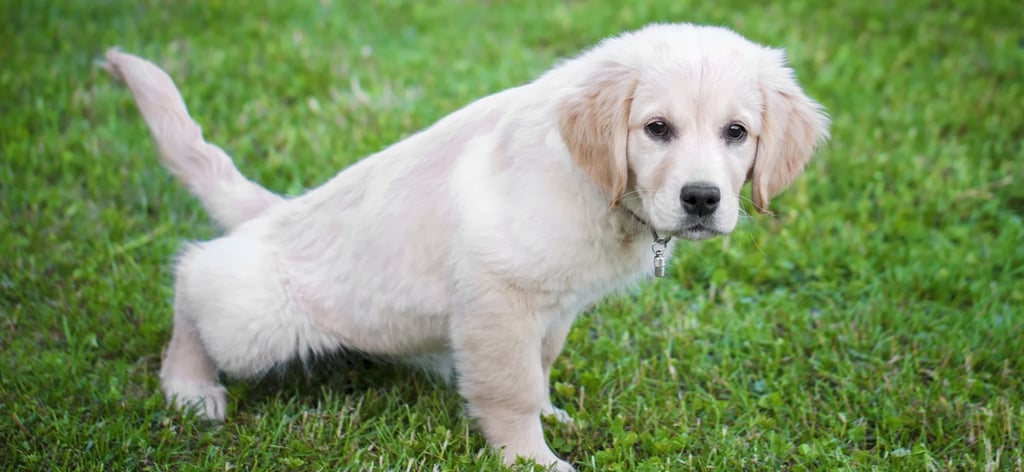
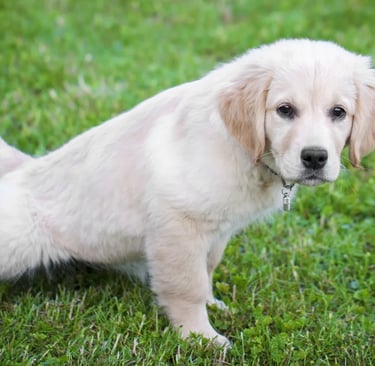
Every new puppy owner will have a moment when they turn their back for two minutes. There is a puddle on the kitchen floor. Then another one appears. Then one shows up on the rug you just bought.
Potty training is the challenge that first-time puppy owners face and it is the number one reason people feel like they are failing in those early weeks. But here is the truth: potty training is not complicated. It just requires consistency, patience and a clear plan that you actually stick to.
This guide gives you that.
When should you start potty training a puppy?
The answer is simple: the moment your puppy comes home.
Most puppies arrive at their homes at 8 weeks old. Many owners assume they need to wait until their puppy's a bit older before starting training but that is one of the most common mistakes you can make. Every day without a routine is a day your puppy is rehearsing going to the toilet wherever they happen to be standing. Those habits are embedded quickly.
The good news is that 8-week-old puppies are absolutely ready to start learning. Their brains are highly receptive. The earlier you establish a routine the faster the whole process clicks into place.
That said, it is important to be realistic. A puppy under 12 weeks has limited physical control over their bladder and bowel. They simply cannot hold it for long no matter how consistent you are. The goal at this age is not perfection. It is building a habit and a routine that your puppy’s developing body will grow into.
Understanding your puppy’s bladder
Puppies develop bladder and sphincter control gradually over their first few months. As a guide:
8 to 10 weeks: Can hold for approximately 1 hour
2 to 3 months: Can hold for approximately 2 hours
3 to 4 months: Can hold for approximately 3 to 4 hours
4 to 6 months: Can hold for approximately 4 to 6 hours
6 months and older: Working toward adult control. 6 To 8 hours in most dogs
These are rough averages. Every puppy is different and smaller breeds typically have smaller bladders that need more frequent emptying.. This framework tells you something critically important: potty training accidents in young puppies are not always about bad behavior or a slow learner. Sometimes your puppy is having an accident simply because their body physically could not hold it longer. Punishing them for that is both unkind and counterproductive.
What you need before you start potty training is important.
Having the tools in place makes potty training significantly easier:
1. High-value training treats. Small, soft smelly treats your puppy goes wild for. You will use these immediately after every outdoor toilet trip. The reward needs to be exciting enough to motivate your puppy.
2. An cleaner. This is non-negotiable. Regular household cleaners do not fully break down the scent compounds in urine. Enzymatic cleaners specifically. Neutralize these compounds removing the scent your puppy can still smell even after you have mopped. If your puppy can still smell the residue of an accident they are far more likely to go in that spot again. Use it on every accident without exception.
3. A crate or puppy pen. Dogs naturally avoid soiling their sleeping area. A sized crate. Just large enough for your puppy to stand turn around and lie down. Becomes a powerful tool for building bladder control.
4. A outdoor toilet spot. Choose one specific area outside and take your puppy there every single time. The accumulated scent from toilet trips acts as a prompt telling your puppy’s brain "this is what this place is for."
Step-by-Step: How to Potty Train a Puppy
Step 1: Build a Rock-Solid Routine
Routine is the engine that drives potty training. The predictably you get your puppy outside at the right moments the fewer accidents happen indoors. And the faster your puppy develops the habit of going outside.
Take your puppy outside to their toilet spot at every single one of these times:
First thing in the morning. Every morning, before anything
After every meal. Digestion triggers the urge to go within 15 to 30 minutes of eating
After every drink of water. In young puppies
After every sleep or nap. Even short ones
After every play session. Excitement and activity both speed things up
Every one to two hours during the day for young puppies. Building up as they develop
Last thing at night. Before the crate and bed
That sounds like a lot of trips outside. It is. At the beginning. The frequency reduces naturally as your puppy gets older and their bladder control develops. For the few weeks treating every one of those moments as a potty training opportunity is the single biggest thing you can do to accelerate the process.
Step 2: Use a Cue Word Consistently
Every time you take your puppy to their toilet spot use the same word or phrase. "Go potty". Be quick" or "Toilet”. Whatever phrase works for you just pick one and use it every time for every trip from day one.
Say it calmly and consistently when your puppy is sniffing around and showing signs of getting ready to go. Over time your puppy connects that word with the act of toileting. This becomes incredibly useful for trips to places bad weather days when you need them to go quickly or before long car journeys.
Step 3: Reward Immediately. Enthusiastically
This is the step most people either rush or forget entirely. And it makes an enormous difference.
The moment your puppy finishes going to the toilet reward them. Not after you walk inside. Not after you clip the lead on. Then in that spot the instant they finish. Use your marker word. "Yes" or "good”.. Immediately follow it with a treat and genuine praise.
The timing matters because puppies live in the present. If the reward comes 30 seconds later back inside the house the connection between going and getting rewarded does not form clearly. But when the reward happens at the moment they finish toileting in the right spot that association builds powerfully and fast.
Step 4: Supervise Constantly Indoors
Between toilet trips your puppy needs to be either actively supervised or in their crate. This is the part of potty training that most people find tiring.. It is the part most responsible for accidents when it slips.
Active supervision means your puppy is in the room as you within your sight at all times. When you cannot supervise. When you are cooking, on a call in the shower or asleep. Your puppy goes in their crate or puppy pen.
This is not cruel. It is strategic. Puppies in a sized crate will naturally try to hold their bladder rather than soil their sleeping area. Every hour they spend in the crate holding it is an hour of bladder control practice. And every unsupervised moment your puppy spends sniffing around the corner of the living room is an opportunity for an accident you are not there to interrupt.
Step 5: Learn to Read Your Puppy’s Signals
Puppies give signals when they need to toilet and the quickly you learn to read them the more accidents you can intercept before they happen.
Common signs your puppy is about to go include: sniffing the floor circling, squatting moving to a corner or a quiet spot suddenly losing interest in play and starting to wander or sitting by the door if they have started to make that connection.
The moment you see any of these signals act immediately. Pick up your puppy. Quickly guide them outside to their spot. Do not wait to see what happens. Speed is everything at this stage.
Step 6: Handle Accidents the Right Way
Accidents are going to happen. With the best routine in the world puppies have accidents. Because they are young their bladders are small and they are still learning. How you respond to those accidents matters enormously.
If you catch your puppy in the act: Make a short sharp interrupting sound. "Ah" or a single clap. To pause what they are doing. Immediately and calmly pick them up. Guide them straight outside to their toilet spot. If they finish outside reward them as normal. Keep your energy no drama, no big fuss.
If you find an accident after the fact: Clean it up with your cleaner. That is it. Do not scold your puppy. Do not take them to the spot to "show them." Your puppy has already completely forgotten the event. Retroactive punishment creates confusion and anxiety not learning. It makes puppies fearful of you when they need to toilet than going to the right place.
The response, to accidents that actually works is simply this: use them as information. An accident tells you that your supervision lapsed or your puppy needed to go than expected or the routine needs tightening.. Move on.
Should You Use Puppy Training Pads?
Puppy training pads are something that a lot of dog trainers and owners do not agree on. Let me tell you what I think.
Puppy training pads can be helpful in some situations. For example if you live in a flat and you do not have a garden or if your puppy is not vaccinated yet and cannot go outside or if you have a small puppy who cannot make it outside in time then puppy training pads might be useful.
The problem with puppy training pads is that they teach your puppy that it is okay to go to the bathroom inside the house on a surface. This is the opposite of what you want your puppy to learn when you are housebreaking them. A lot of owners find that puppies who use puppy training pads take longer to learn to go to the bathroom outside the house. This is because the puppy has to learn two sets of rules and then forget the rule about going to the bathroom inside the house.
If you decide to use puppy training pads you should only use them for a time. You should have a plan to help your puppy start going to the bathroom outside the house. You can do this by moving the puppy training pad closer to the door over time. Eventually you can move it outside. Then get rid of it.
For people it is better to just start with outdoor bathroom training from the beginning. This is faster and easier than using puppy training pads.
Crate Training and Potty Training: How They Work Together
Crate training and potty training are connected. Using them together can really help with potty training.
Here is why this works. The crate helps your puppy learn to hold their bladder. When your puppy is in the crate they do not want to go to the bathroom there. So when you let them out of the crate they will really need to go to the bathroom. You can take them to the bathroom spot and reward them when they go to the bathroom. This helps your puppy learn to go to the bathroom outside the house.
The routine is simple. You put your puppy in the crate set a timer and then take them to the bathroom when the timer goes off. When they go to the bathroom you reward them. Then you bring them inside and supervise them. After a while you put them back in the crate. You keep doing this over.
This is not about keeping your puppy locked up all day. It is about making sure they do not have accidents when you are not watching them. It helps them learn to control their bladder and go to the bathroom outside the house.
Potty Training at Night
The hardest part of potty training is at night. This is especially true when your puppy is young and their bladder is not strong yet.
Here is what you should do. Take your puppy to the bathroom right before you put them to bed. Make sure it is an quiet trip. Do not play with them. Get them excited. Just take them to the bathroom. Bring them back to their crate.
You should also set an alarm to take your puppy to the bathroom at night. Young puppies need to go to the bathroom a lot at night. As they get older they can go longer without going to the bathroom.
When you take your puppy to the bathroom at night make it a quiet and boring trip. Do not turn on the lights. Play with them. Just take them to the bathroom. Bring them back to their crate. The goal is for your puppy to barely wake up and then go back to sleep.
As your puppy gets older they will not need to go to the bathroom much at night. Eventually they will be able to sleep through the night without any problems.
Common Potty Training Mistakes to Avoid
One mistake people make is giving their puppy much freedom too soon. This can cause accidents. You should give your puppy freedom as they get better at going to the bathroom outside the house.
Another mistake is punishing your puppy when they have an accident. This does not. Can make your puppy anxious. Instead just clean up the accident. Move on.
You should also reward your puppy away when they go to the bathroom outside the house. If you wait long to reward them they might not understand what they are being rewarded for.
It is also important to use the cue word every time you take your puppy to the bathroom. If you use words your puppy might get confused.
Do not expect much from your puppy. If they have an accident it is not the end of the world. Just clean it up. Move on. Remember that your puppy is still learning.
Finally make sure you clean up accidents, with the cleaner. If you do not use a cleaner your puppy might still be able to smell the accident and have another accident in the same spot.
Final thoughts
Potty training a puppy can take time. Most puppies are not potty trained until they are four to six months old. Some puppies may take longer especially if they are small or have had a time with potty training.
The good news is that potty training gets easier over time. As your puppy gets older they will be able to hold their bladder for periods of time and they will be less likely to have accidents in the house.
If you are patient and consistent you can potty train your puppy. It may take some time and effort. It will be worth it in the end.
Frequently asked questions
When should I start potty training my puppy?
You should start potty training your puppy soon as you bring them home which is usually at eight weeks old.
How often should I take my puppy outside to go to the bathroom?
You should take your puppy outside to go to the bathroom every one to two hours well as after meals and playtime.
What should I do if my puppy has an accident in the house?
If you catch your puppy in the act calmly take them outside to finish going to the bathroom. If you do not catch them just clean up the mess. Try to prevent it from happening again in the future.
How long does it take to potty train a puppy?
Most puppies are potty trained by the time they are four to six months old. However some puppies may take longer.
Should I use puppy training pads?
Puppy training pads can be helpful, in situations but they can also make it harder to potty train your puppy in the long run. If you do use puppy pads make sure to have a plan to stop using them
Can I potty train a puppy without a crate?
Yes,. It is much harder. A crate can help you with potty training by giving your puppy a space to hold their bladder until you can take them outside.
Is it normal for a potty-trained puppy to start having accidents?
Yes it is normal for puppies to have accidents sometimes even after they are potty trained. If your puppy is having a lot of accidents you may want to talk to a vet to rule out any underlying issues.
Contact
We're here to help with puppy questions.
© 2025. All rights reserved.