
How to Stop Your Puppy Getting Car Sick
Is your puppy getting car sick? Learn the causes, signs, and 10 proven ways to stop puppy motion sickness naturally and with vet-approved help.
PUPPY CARE
Pup Care and Training
5/17/20268 min read
You're on a car ride with your puppy and in ten minutes they're already drooling, whining and staring at you with that unmistakable glassy look in their eyes. Then it happens.
Car sickness in puppies is super common and really unpleasant for everyone.. The good news is that it's manageable. Understanding why your puppy gets car sick helps you fix it.. In most cases you can fix it.
Here's what you need to know.
Why Do Puppies Get Car sick
Puppy car sickness has two main causes. And most cases involve both.
1. The Physical Cause: The Inner Ear
Your puppy’s inner ear helps with balance and spatial orientation. During a car ride the inner ear detects movement, but your puppy’s eyes. Especially if they're looking at something inside the car. Don't see the level of motion. This mismatch sends confusing signals to the brain making your puppy feel nauseous and vomit.
Puppies are more likely to get car because their inner ears aren't fully developed. The parts that help with balance are still growing, which is why car sickness is more common in puppies than adult dogs. The good news is that many puppies outgrow it as their inner ear develops. Between 12 months and two years.
2.The Psychological Cause: Anxiety and Association
The other big cause of car sickness in puppies is stress and anxiety.. The two causes can make each other worse. A puppy who feels unwell in the car quickly associates the car with nausea. The car becomes a predictor of sickness. That anxiety triggers physical symptoms before the car even moves. It becomes a cycle that’s hard to break.
Genetics past experiences and individual temperament also play a role. Some puppies are more prone to motion sickness than others. But the right approach still makes a big difference.
Signs Your Puppy Is Getting Car sick
Car sickness in puppies doesn't always mean immediate vomiting. Often there are signs that your puppy is struggling. And recognizing them early helps you intervene before things get worse.
Signs of puppy motion sickness include:
1. drooling or hypersalivation
2. Repeated yawning
3. Lip licking or swallowing repeatedly
4. Whining, whimpering or vocalizing
5. Restlessness and inability to settle
6. Lethargy or appearing unusually tired and withdrawn
7. Shaking or trembling
8. Looking glazed, unfocused or disconnected
9. Vomiting. Which can happen within minutes of setting off or after a journey
Some puppies show all these signs. Others show one or two before vomiting. Once you know your puppy’s pattern you can act on the signals before things get bad.
10 Ways to Stop Your Puppy Getting Car Sick
1. Don't Feed Your Puppy Before a Journey
An empty stomach is less likely to produce vomit. Withhold food for two to four hours before a car ride. Water is fine up until departure but avoid large amounts immediately before travelling.
This simple step alone reduces the frequency and severity of vomiting in puppies. It won't address the underlying cause. It helps.
2. Position Your Puppy Correctly in the Car
Where your puppy sits in the car affects how car they get. The back seat. The middle back seat. Experiences more motion than the front. The boot of an estate or SUV is often more stable.
More importantly, where your puppy looks matters. Facing forward and looking out of the window helps your puppy’s visual input align with what their inner ear detects. This reduces the conflict that triggers nausea. A dog box or crate that faces forward or a seat position where your puppy can see the road ahead is better than a rear-facing or enclosed position.
3. Keep the Car Cool. Well Ventilated
Heat makes nausea worse in dogs and humans. A warm stuffy car escalates car sickness into vomiting. Keep the car cool and ventilated.
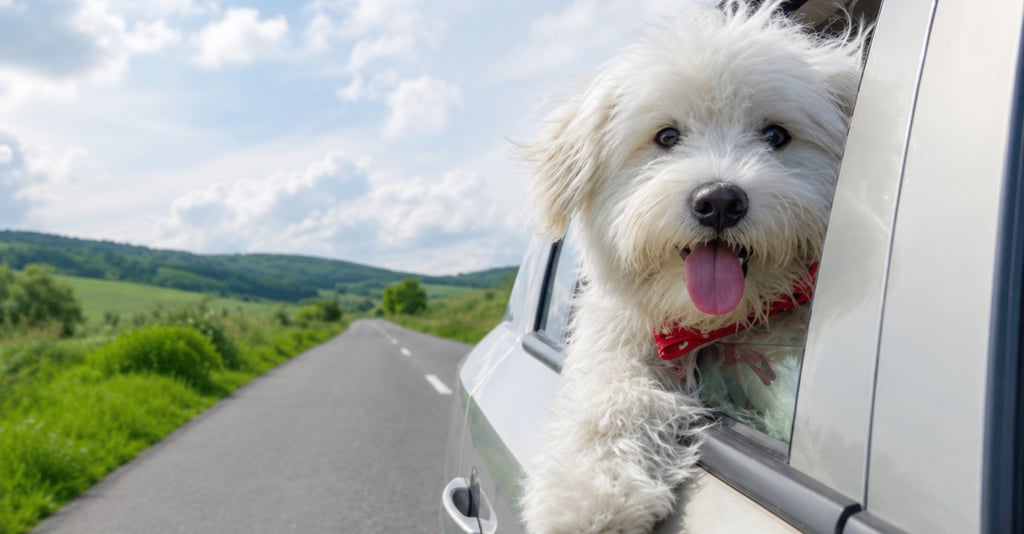
Fresh air from an open window also helps your puppy look outside and benefits from visual alignment. Don't let your puppy hang their head out of the window. It's unsafe. Can cause eye and ear damage. But a few inches of fresh air make a difference.
4. Take Breaks on Longer Journeys
For journeys longer than 30 to 40 minutes build in regular stops. Pull over open the car and let your puppy step out onto ground sniff around drinking water and reset. Five to ten minutes of ground time helps the inner ear recalibrate and reduces stress hormones.
5. Start Desensitizing Your Puppy to the Car
This is the effective long-term solution for anxiety-driven car sickness. And it works well for puppies especially if you start early.
Desensitization builds associations with the car so gradually that your puppy never gets overwhelmed or nauseous. Here's how:
Stage 1: Let your puppy sniff around the car with the engine off. Treats, praise, calm energy. No pressure to get in. Do this daily until your puppy approaches the car with no anxiety.
Stage 2: Encourage your puppy into the car with treats. Sit with them for a minute. Engine still off. Lots of rewards. Get out before they show stress.
Stage 3: Engine on, car stationery. Treats, calm energy, brief session. Get out on a note.
Stage 4: A drive. To the end of the road and back. Return home on a note before sickness develops.
Stage 5: Gradually increase journey length over days and weeks always keeping sessions below the threshold where sickness or anxiety appears.
6. Make the Destination Worth the Journey
One of the powerful tools in your desensitization toolkit is making car journeys predict something fantastic. If every car journey ends at the vet or groomers. Places your puppy finds stressful. The car becomes associated with news.
Counter this deliberately. Take your puppy on car journeys that end at the park a friend’s house or somewhere they love. The car becomes the beginning of adventure than the herald of something unpleasant.
7. Try Calming Aids for Puppies
For puppies whose car sickness is largely anxiety-driven natural calming aids can help:
Adaptil (DAP) spray. A synthetic version of the calming pheromone that mother dogs produce. Spray it in the car 15 to 30 minutes before the journey. It can reduce travel-related anxiety.
Calming supplements. Products containing L-theanine, chamomile or milk proteins are available for dogs. Can reduce generalized anxiety. These work best given one to two hours before travel. Speak to your vet about the option for your puppys age and size.
Pressure wraps. Products like the Thundershirt apply constant pressure to your puppy’s torso, which many dogs find calming during stressful situations including car travel.
8. Try Ginger as a Natural Nausea Remedy
Ginger has -nausea properties in humans and emerging evidence supports its effectiveness in dogs too. Small amounts of ginger. In the form of a ginger biscuit a ginger snap or a small amount of fresh or dried ginger mixed into food. Given 30 minutes before travel may help reduce nausea in dogs prone to motion sickness.
Dosage matters: much ginger can cause digestive upset. Check with your vet about an amount for your puppy’s size and age before using it regularly.
9. Avoid Screens and Moving Patterns
Some dogs appear to be more affected by moving patterns. The flickering of trees past a window the flash of passing traffic or even a screen playing inside the car. While this is less well-studied than aspects of motion sickness it's worth experimenting with blocking some of your puppy’s lateral views if they seem particularly reactive, to movement.
A travel crate with sides or a dog barrier that reduces the amount of moving scenery your puppy can see may help for some dogs. Though others do better when they can see out clearly. Every puppy is different. You need to pay attention to what makes your individual puppy’s symptoms better or worse.
10. Ask Your Vet About Anti-Sickness Medication
If your puppy’s car sickness is severe, persistent and not responding to the approaches it's time to bring in veterinary support. There are prescription medications available that can stop car sickness.
Cerenia, also known as maropitant citrate is a commonly prescribed and effective option. Its specifically licensed for the prevention of motion sickness in dogs. It works by blocking the signals in the brain that trigger vomiting. It's safe and highly effective. In cases it provides enough relief that desensitization can happen alongside it. This helps puppies have car experiences.
Antihistamines such as diphenhydramine are sometimes used. Always check with your vet before giving any human medication to your puppy. Dosages, formulations and safety profiles differ significantly between dogs and humans.
Your vet may also want to rule out any health issues. This is particularly important if your puppy’s motion sickness is unusually severe.
Will My Puppy Always Be Car
Not necessarily. In cases the answer is no. Many puppies grow significantly less susceptible to car sickness as their inner ears fully develop. This usually happens by around 12 to 18 months. With desensitization work and positive car experiences most puppies that start as terrible car travelers become perfectly comfortable adults in the car.
The key is not to let the problem compound. Every vomiting car journey deepens the association. The you start actively addressing it the faster and more completely the problem resolves.
Some dogs do remain prone to car sickness throughout their lives. This is particularly true for those with sensitive inner ears or high-anxiety temperaments. For these dogs the combination of management calming support and veterinary medication makes a huge difference.
When to See the Vet About Puppy Car Sickness
car sickness is a manageable issue.. There are situations where your vet should be involved:
Your puppy’s car sickness is severe and doesn't improve despite consistent preventive measures.
Your puppy shows signs of distress in the car that seem disproportionate to an anxiety response.
You want access to prescription -nausea medication like Cerenia.
You notice signs of nausea or vomiting outside of car journeys. This could point to a health issue.
Your puppy has a known ear condition that may be contributing to balance difficulties.
A vet can also help you design a desensitization plan. They can rule out any physical causes beyond normal inner ear sensitivity.
Final Thoughts
A puppy who gets car is not a puppy who will always get car sick. With the approach most puppies make real lasting progress.
Start small. Keep journeys short and positive. Build up gradually. Be patient.. If you need veterinary support along the way don't hesitate to ask for it.
The goal is a dog who jumps into the car without a thought. This dog is excited for whatever adventure comes next. That dog is absolutely achievable. You're already, on the way.
Frequently Asked Questions
Why do puppies get car sick more than adult dogs?
Puppies are more susceptible to motion sickness because their inner ears - which control balance and spatial awareness - haven't fully developed yet. The sensory mismatch between what the inner ear detects and what the eyes see triggers nausea. Most puppies become less prone to car sickness as their inner ear matures, usually by 12 to 18 months.
What are the signs my puppy has car sickness?
Signs include excessive drooling, repeated yawning, lip licking, whining, restlessness, trembling, lethargy, and eventually vomiting. Some puppies show several signs; others go straight to vomiting. Learning your puppy's early warning signals lets you intervene or stop the journey before full sickness develops.
How long before a car journey should I withhold food from my puppy?
Withhold food for two to four hours before any car journey. This doesn't cure car sickness but significantly reduces the likelihood and severity of vomiting. Fresh water is fine until departure.
Can I give my puppy ginger for car sickness?
Small amounts of plain ginger given 30 minutes before travel may help reduce nausea in some puppies. Speak to your vet about an appropriate amount for your puppy's size before using it regularly.
What medication is available for dog car sickness?
Cerenia (maropitant citrate) is the most effective prescription medication for dog motion sickness and is specifically licensed for this use. Your vet may also discuss antihistamines in some cases. Never give human travel sickness medication without explicit veterinary guidance.
Will my puppy grow out of car sickness?
Many puppies do, as their inner ears fully develop - typically by around 12 to 18 months. Consistent desensitization work alongside veterinary support where needed gives you the best chance of having a comfortable car traveler for the long term.
Contact
We're here to help with puppy questions.
© 2025. All rights reserved.