
What Is the 3-3-3 Rule for Dog Training?
What is the 3-3-3 rule for dogs? Learn how the 3 days, 3 weeks, and 3 months framework helps your new dog settle, decompress, and thrive at home.
PUPPY TRAINING
Pup Care and Training
5/12/20267 min read
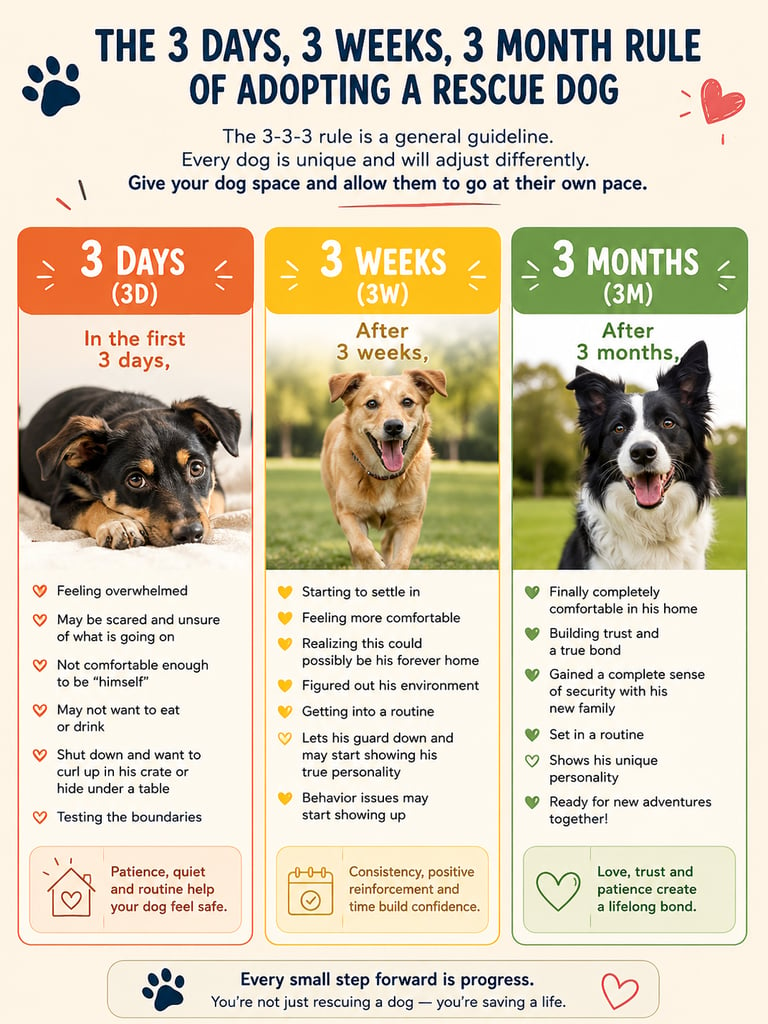
You have just brought your dog home and you are excited. The dog is not quite what you expected. Maybe the dog is hiding under the bed. Maybe the dog is pacing the hallway. Maybe the dog has barely. Will not make eye contact.. Maybe the dog is bouncing off the walls and getting into everything.
You are wondering if this is normal. You are wondering if you made a mistake. You are wondering if something is wrong with the dog.
Certainly the answer is no. The 3-3-3 rule for dogs is what you need right now.
What Is the 3-3-3 Rule for Dogs?
The 3-3-3 rule for dogs is an idea that describes the three key stages most dogs go through when they move to a new home. The 3-3-3 rule for dogs applies to rescue dogs adopted dogs, rehomed adult dogs and puppies too. Any dog that moves from one place to another is going through a change. The 3-3-3 rule for dogs gives you an idea of what to expect.
The three stages are:
1. 3 Days. The dog is getting used to the place
2. 3 Weeks. The dog is learning the daily routine
3. 3 Months. The dog is feeling at home
It is not a strict schedule. Some dogs go through these stages faster. Some dogs need time.. The 3-3-3 rule for dogs is a very useful tool for any new dog owner.
Here is what each stage looks like.
The 3 Days: The Dog is Getting Used to the New Place
The first three days with your new dog are about helping the dog feel safe. Think about what the dog has been through. The dog has left the home the old smells and the people the dog knew. The dog is in a new place with new sounds, new faces and new routines. Even a confident dog finds this overwhelming. A sensitive or fearful dog may look like a completely different dog in those first few days.
What the dog might look like in the 3 days:
1. Hiding in one spot. Not wanting to move
2. Sleeping a lot more than usual
3. Not eating or eating very little
4. Panting, yawning or pacing
5. Not showing personality
6. Following you from room to room
7. Having accidents in the house even if the dog was house-trained before
This does not mean the dog is broken. This does not mean the dog will not be a companion. It means the dog is overwhelmed and needs you to give the dog space.
How to help the dog in the 3 days:
Keep the home calm and quiet. Do not invite guests over. Take the dog to busy places. Let the dog approach people. Explore the new space on the dogs own terms. Sit quietly near the dog. Use a calm voice. Create a space for the dog to retreat to when things feel too much. Stick to a routine for feeding and toilet breaks. Keep everything safe.
This is the time for the dog to get used to the place. Do not try to do much. The dog does not need stimulation now. The dog needs calmness.
If the dog has not eaten or drunk anything in 36 hours or if the dog is showing signs of sickness contact the vet. Puppies can get dehydrated quickly. Most dogs will eat once they relax. Trust your instincts. If something feels wrong get it checked.
The 3 Weeks: The Dog is Learning the Routine
After a few days you will notice a change. The dog starts to come out of the dogs shell. The dog begins to move around the house explore show interest in food and play and make eye contact with you.
This is the start of the stage.. While it feels like great progress. And it is. It also comes with new challenges.
What the dog might look like in weeks 1 to 3:
1. Starting to show the dogs personality
2. Testing boundaries. Jumping up or stealing things
3. Following the routine
4. Forming attachments to family members
5. Becoming more alert and reactive
6. Showing some anxiety or resource guarding
The dog is feeling more secure and starting to figure out the world. This is not the dog being bad. This is the dog being themselves and learning where the edges are.
How to help the dog in weeks 1 to 3:
Be consistent and predictable. The dog is learning what the rules are and what the daily pattern looks like. Start with training. Name recognition, sit and basic handling. This is not about pushing the dog. This is about building communication and establishing a relationship.
Stick to a feeding schedule. Keep walks at times each day. Use commands and rules. And make sure everyone in the house uses the same ones. Introduce people, animals and places slowly and positively. Do not rush socialization.
The 3 Months: The Dog is Feeling at Home
After three months something special happens. The dog who hid under the bed on day one is becoming a dog. The dog is becoming your dog.
This is the stage where the dog starts to trust you. The dog knows who you are, what your daily life looks like and that the dog is safe with you. The dog. Becomes themselves.
What the dog might look like by 3 months:
1. Relaxed and comfortable in the home
2. Responding to their name and basic commands
3. Showing affection and attachment to family members
4. Displaying their personality
5. Sleeping soundly eating consistently and behaving predictably
6. Engaging with training and activities
7. Navigating situations with ease and confidence
This does not mean all challenges disappear at the three-month mark. Some dogs still need time and help.. Three months is typically the point where the foundation is solid. The dog knows they belong here.. That changes everything.
How to help the dog during months 1 to 3:
Keep building the bond through affection, consistent training and activities. Puzzle feeders, nose work games, new walking routes and short training sessions. Continue to reinforce the routines and rules that have been working. Respect the dogs personality and pace. Learning which one the dog is and honoring it deepens the trust faster than anything else.
If any specific behavioral challenges persist beyond the three-month mark this is the time to bring in a positive reinforcement-based trainer, for professional support. Some behaviors need expert guidance to address safely and effectively.
Does the 3-3-3 Rule Apply to Puppies Too?
Yes the 3-3-3 rule applies to puppies. The 3-3-3 rule is usually talked about when it comes to adult dogs that have been rescued or are in a home.. The 3-3-3 rule is also very important for puppies that are coming home for the first time.
A puppy that is eight weeks old has just left its mother and the other puppies it was born with. The puppy has never slept by itself before. Everything around the puppy is new. The puppy might be very excited and overwhelmed. The puppy needs time to get used to its home.
If you have just brought a puppy home and it seems upset or nervous the 3-3-3 rule can help you understand what is happening. The 3-3-3 rule can help you respond to the puppy in an patient way.
Before Your New Dog Arrives: A Quick Preparation Checklist
You should get everything before your new dog comes home. This will make the first few days much easier. You will need a things.
You will need a crate or a quiet place for the dog to rest. You will need bowls for food and water. You will need food that's right for the dogs age. You will need a collar, a harness and an ID tag. You will need toys that're safe for the dog to chew on.
You should also make a plan with the people in your household. You should decide where the dog will sleep and which rooms the dog is not allowed in. You should all agree on what commands to use with the dog. You should all be patient. Give the dog time to get used to its new home.
Behavior vs. When to Seek Help
Most of what you see in the first few weeks is normal. The dog is just getting used to its home.
Here are some things that are normal: the dog might not eat for a day or so the dog might hide or stay in one place the dog might sleep more than usual the dog might be nervous around people the dog might have accidents in the house and the dog might be a little clingy.
But if you see these things you should get help from a vet or a dog trainer: the dog has not eaten or drunk anything in than a day and a half the dog is vomiting or has diarrhea the dog is hiding and will not come out the dog is being aggressive or the dog is very anxious and it is not getting better.
Final Thoughts
The 3-3-3 rule is not magic. It will not make your dog perfect in a few days.. It can help you be patient and understand what your dog is going through.
Every dog is different. Every dog has its personality and its own way of doing things. But all dogs need the things: they need to feel safe they need to have a routine and they need someone to take care of them.
If you give your dog these things you will be surprised at how much your dog will give you back.
Asked Questions
What is the 3-3-3 rule for dogs?
The 3-3-3 rule is a way to help dogs get used to their home. It says that dogs go through three stages: the first three days are for getting used to the home the next three weeks are for learning the routine and the next three months are for feeling completely at home.
Does the 3-3-3 rule apply to puppies. Just rescue dogs?
The 3-3-3 rule applies to both puppies and rescue dogs. Any dog that is moving to a home will need time to get used to it.
Why is my new dog not eating?
It is normal for dogs to not eat much when they are first in a home. They are. Overwhelmed. Long as they are drinking water and seem okay they will probably start eating again soon.
When will my rescue dog show its personality?
You will probably start to see your dogs personality in a weeks. By the time three months have passed you will have an idea of what your dog is, like.
How can I help my new dog feel better?
You should keep your home calm and quiet. Do not have many visitors or take your dog to too many new places. Let your dog get used to its home at its own pace. Use a voice and give your dog a safe place to rest.
What if my dog is still struggling after 3 months?
Some dogs need time to get used to their new home. If your dog is still having problems you should talk to a dog trainer or a vet to see if there is something you can do to help.
Contact
We're here to help with puppy questions.
© 2025. All rights reserved.