
Is My Dog Hungry? 7 Signs Every Owner Should Know
Not sure if your dog is hungry? Discover 7 clear signs your dog needs food, the difference between hunger and begging, and tips for healthy feeding habits.
PUPPY CARE
Pup Care and Training
6/21/20266 min read
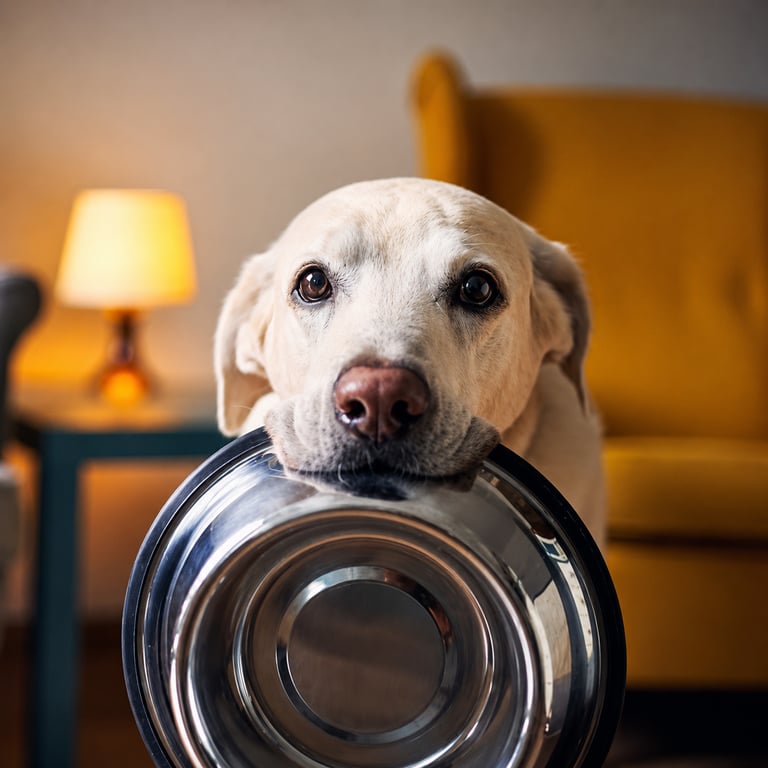

Your dog is staring at you. Then at the bowl. Then at you again. The tail is going. There may be whimpering involved.
But here's the real question: are they actually hungry - or have you just been expertly manipulated by an animal who has spent thousands of years perfecting the art of the begging face?
It's genuinely hard to tell. Dogs are enthusiastic about food whether they last ate an hour ago or five hours ago. So how do you know when they actually need feeding - and when they're just pushing their luck?
Here are 7 clear signs your dog is genuinely hungry, plus everything you need to know about feeding the right amount.
First: Understand the Difference Between Hunger and Begging
This distinction matters a lot - because confusing the two is how dogs end up overweight and owners end up feeling guilty for no reason.
Genuine hunger is a physical state. Your dog's stomach is empty, their blood sugar has dipped, and their body is sending real signals that they need fuel.
Begging is a learned behaviour. Your dog has discovered that looking at you with those eyes, at that moment, in that way - gets results. It doesn't mean they're hungry. It means they're smart and they've learned how to work you.
The problem is that both look almost identical from the outside. Your dog doesn't have a hunger meter you can check. But they do have body language, behaviour patterns, and physical cues that tell the story - if you know what to look for.
7 Signs Your Dog Is Actually Hungry
1. They Finish Their Meals Completely and Quickly
A dog who is genuinely hungry eats their food fast and finishes everything in the bowl. If your dog is dawdling over meals, leaving food behind, or walking away before the bowl is empty - they probably aren't that hungry. A dog eating with urgency and finishing consistently is a dog whose portions might genuinely be too small.
That said, eating quickly isn't always a hunger signal on its own. Some dogs are naturally fast eaters regardless of how hungry they are. Look for this pattern combined with other signs on this list before drawing conclusions.
2. They're Looking for Food Between Meals
A genuinely hungry dog goes looking. They sniff around the kitchen floor. They investigate corners where food might have dropped. They hover near where food preparation happens. They investigate other pets' bowls.
This food-seeking behaviour between meals - not just when you walk into the kitchen - is one of the more reliable indicators that your dog's current portion isn't satisfying them between feeds. A dog who ate enough will typically rest contentedly until their next meal rather than actively hunting for more.
3. They're Losing Weight or Looking Thin
This is the most objective sign of all - and the one that overrides every other observation.
Run your hands along your dog's ribcage. You should be able to feel the individual ribs fairly easily without pressing hard, but they shouldn't be visibly jutting out. If you can see the ribs clearly, see the hip bones, or notice the waist looking dramatically tucked in when viewed from above, your dog may genuinely be underfed.
Healthy weight looks like this: ribs felt but not seen, a visible waist when viewed from above, and an abdomen that tucks up slightly when viewed from the side. If your dog is losing condition despite eating regularly, speak to your vet - this could indicate either inadequate feeding or an underlying health issue affecting how they absorb nutrition.
4. They Whine, Pace, or Follow You Into the Kitchen
There's a particular type of behaviour that dogs do when they're genuinely hungry: they can't settle. They whine persistently. They follow you from room to room, specifically toward the kitchen. They pace. They check the bowl repeatedly. They hover near where food comes from.
Compare this to begging behaviour, which tends to happen at specific triggers - the moment you sit down to eat, the moment you open the fridge, or when you're preparing food. Genuine hunger shows up more persistently and at times that aren't specifically linked to you eating.
If your dog is restless and unsettled between meals - not just when food is visible or being prepared - that's a stronger signal that they genuinely need more.
5. They Eat Things They'd Normally Ignore
A dog who starts eating grass obsessively, scavenging on walks, attempting to get into the bin, or eating things they'd usually walk past might be genuinely hungry. When a dog is under-fueled, their scavenging instinct kicks in. The world becomes a potential food source.
This doesn't always mean underfeeding - scavenging can also be boredom-driven or just a strong natural instinct in certain breeds. But if it's happening alongside other signs on this list, it's worth reviewing how much your dog is actually eating.
6. They're More Interested in Your Food Than Usual
Most dogs are interested in human food to some degree - it smells incredible to them and they've often been rewarded for showing interest in the past. But a dog who is obsessively fixated on your plate, who can't be redirected away from the dining table, who follows every bite with their eyes and becomes increasingly persistent - may be genuinely hungry rather than opportunistically begging.
Again, context matters. If your dog has always been food-obsessed around mealtimes, this is likely learned behaviour rather than genuine hunger. But if the intensity has increased noticeably - if your dog who was usually manageable at the dinner table has started becoming much more persistent - a feeding review is worth doing.
7. They're More Lethargic or Less Energetic Than Usual
Food is fuel. A dog who isn't getting enough of it will eventually show it in their energy levels. If your dog seems unusually flat, reluctant to play, or less enthusiastic than normal for activity they usually enjoy - and this is paired with the other signs on this list - their caloric intake might not be meeting their needs.
Low energy has many possible causes, so don't jump straight to hunger as the answer if this is the only sign you're seeing. But combined with weight loss, food-seeking behaviour, or fast meal finishing, reduced energy is worth taking seriously.
The Hunger vs. Begging Test
Not sure which category your dog falls into? Try this.
Feed your dog their normal meal at their normal time. Walk away and leave them to eat. Come back 20 minutes later.
If they finished everything quickly and are still hovering near the bowl or kitchen - hunger is a possibility worth investigating.
If they've eaten about half and walked away - they're not particularly hungry.
If they barely touched it - they're definitely not underfed.
Then pay attention for the next two hours. Does your dog settle and rest contentedly? Or do they seek you out, whine, and show persistent food-seeking behaviour well away from mealtimes and away from you eating?
That pattern - settled after meals or persistently food-seeking between them - tells you a great deal about whether genuine hunger is in play.
Final Thoughts
Most of the time, a dog who looks hungry is a dog who has learned that looking hungry gets results. They're not suffering - they're just very, very good at what they do.
But genuine hunger does happen, and it's worth knowing how to spot the difference. Use the signs in this guide, keep an eye on your dog's body condition, feed consistently twice a day, and resist those eyes at the dinner table.
They'll survive the disappointment. Probably.
Frequently Asked Questions
How do I know if I'm feeding my dog enough?
The most reliable indicator is body condition rather than portion size. You should be able to feel your dog's ribs without pressing hard but not see them clearly. A visible waist from above and a slight abdominal tuck from the side suggest a healthy weight. If you're unsure, ask your vet for a body condition score assessment.
Is it okay if my dog finishes their food really fast?
Fast eating alone isn't a sign of hunger - many dogs are naturally quick eaters. It becomes a concern when it's combined with weight loss, food-seeking between meals, or persistent begging behaviour that doesn't respond to routine and structure.
My dog always seems hungry after eating - is something wrong?
Perpetual hunger after meals can be breed-related (particularly in Labradors), a learned behaviour, or occasionally a medical issue affecting fullness signals or nutrient absorption. If it's sudden and significant, mention it to your vet. If it's been lifelong, it's most likely behavioural or breed-specific.
How many times a day should I feed my dog?
Twice daily - morning and evening - is the standard recommendation for most adult dogs. Consistent mealtimes help regulate appetite, support digestion, and make it much easier to distinguish genuine hunger from habit-driven begging.
Should I leave food out all day for my dog?
Free feeding - leaving food available all day - makes it very difficult to monitor how much your dog is eating, manage their weight, or tell when their appetite changes. Scheduled mealtimes are strongly recommended for most dogs.
Contact
We're here to help with puppy questions.
© 2025. All rights reserved.