
What Should You Not Feed a Puppy? 12 Foods to Avoid
Wondering what not to feed your puppy? Discover 12 dangerous foods puppies should never eat, why they're harmful, and what to do if your puppy eats one.
PUPPY CARE
Puppy Care and Training
7/18/20269 min read
Your puppy will eat almost anything. That's part of their charm - and part of what makes them so vulnerable.
Many of the foods sitting in your kitchen right now are perfectly safe for you but genuinely dangerous for your puppy. Some cause stomach upset. Others cause organ failure. A few can be fatal even in small amounts. And because puppies are smaller and their systems are less developed than adult dogs, they're often more severely affected.
This isn't meant to scare you. It's meant to make sure you know exactly what to keep out of reach - because most puppy poisonings happen at home, through well-meaning owners sharing food without realising the risk.
Here are 12 foods your puppy should never eat and what to do if they get into something they shouldn't.
The Most Important Rule Before We Start
If your puppy has eaten anything on this list - especially in a concerning amount - don't wait to see if symptoms develop. Call your vet or an emergency animal poison helpline immediately. In many cases, acting within the first hour dramatically improves the outcome. Waiting for symptoms means the substance has already been absorbed.
Keep your vet's number saved in your phone. If you're in the UK, the Animal Poison Line is available 24/7. In the US, the ASPCA Animal Poison Control Center operates around the clock. These services can advise you on whether emergency treatment is needed.
Now - the list.
1. Chocolate
This is the one most people know about - but it's worth understanding exactly why it's so dangerous.
Chocolate contains substances called methylxanthines - specifically theobromine and caffeine. Dogs metabolise these compounds far more slowly than humans do, which allows them to build up to toxic levels in the body. The result can be vomiting, diarrhoea, excessive thirst, hyperactivity, irregular heart rhythm, tremors, seizures, and in severe cases, death.
The darker the chocolate, the more dangerous it is. Baking chocolate and dark chocolate contain the highest concentrations of methylxanthines. Milk chocolate contains less. White chocolate contains the least - but it still contains enough fat and sugar to cause serious digestive problems and should still be kept away from puppies entirely.
Small breed puppies and very young puppies are at significantly higher risk because the toxic dose scales by body weight. A small amount of dark chocolate can be genuinely life-threatening to a tiny puppy.
If your puppy eats chocolate, call your vet immediately - don't wait for symptoms.
2. Xylitol
Xylitol is a sugar substitute found in an enormous range of products: sugar-free chewing gum, some peanut butters, sugar-free sweets and mints, certain vitamin supplements, toothpaste, and even some baked goods.
In humans, xylitol is harmless. In dogs, it triggers a rapid and severe release of insulin, causing dangerously low blood sugar. Symptoms include vomiting, weakness, loss of coordination, and seizures - often within 30 minutes of ingestion. In larger amounts, xylitol causes acute liver failure, which can be fatal.
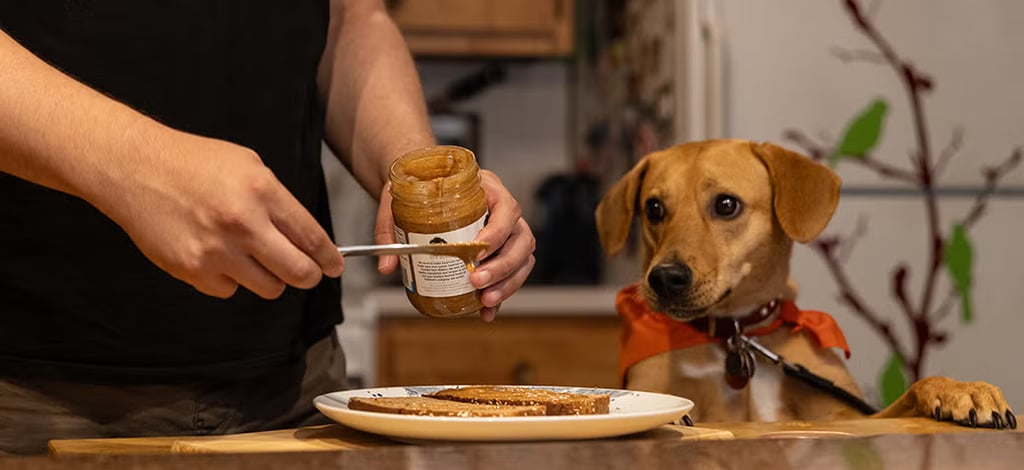
This is one of the most dangerous substances on this list because it's hidden in so many seemingly ordinary products. Always check the ingredients of any peanut butter before giving it to your puppy - some popular brands contain xylitol. Stick to plain, xylitol-free options only.
Keep anything sugar-free well out of reach.
3. Grapes and Raisins
Grapes - and their dried forms, raisins, sultanas, and currants - can cause acute kidney failure in dogs. What makes them particularly frightening is that researchers still don't know exactly which compound in grapes causes the toxicity. Some dogs have eaten grapes repeatedly with no apparent problem, and then been severely poisoned by the same amount. There is no established safe dose.
Because of this unpredictability, grapes and raisins should be treated as highly toxic and kept completely away from your puppy at all times. Even a small amount can trigger kidney failure in some dogs.
Watch out for foods that contain raisins - fruit cake, hot cross buns, mince pies, and some breakfast cereals all contain them and are often sitting at puppy nose height.
Symptoms of grape toxicity include vomiting, diarrhoea, lethargy, and decreased urination - contact your vet immediately if you suspect your puppy has eaten any.
4. Onions, Garlic, Chives, and Leeks
The entire Allium family - onions, garlic, chives, leeks, shallots - is toxic to dogs. The sulphur-containing compounds in these vegetables damage red blood cells, causing a form of anaemia called Heinz body anaemia, where the red blood cells rupture and the body can no longer carry oxygen effectively.
Symptoms include weakness, lethargy, reduced appetite, pale gums, vomiting, and sometimes red-tinged urine. The damage often takes several days to become apparent - which means your puppy might seem fine initially before becoming seriously ill.
Garlic is the most potent of the group - it's approximately five times more toxic per gram than onion. All forms are dangerous, including cooked, dried, and powdered versions. That means garlic powder, onion powder, and any cooked food seasoned with either of these can be harmful.
Be particularly careful with leftovers, sauces, gravies, and soups - these often contain onion or garlic even when you can't taste them distinctly.
5. Macadamia Nuts
Macadamia nuts cause a distinctive and unpleasant reaction in dogs: weakness, particularly in the hind legs, vomiting, tremors, fever, and depression. The exact toxic compound hasn't been identified, but even a small number of macadamia nuts can trigger these symptoms in a puppy.
The effects are typically not fatal, but they cause significant distress and discomfort - and because the mechanism isn't fully understood, the risk of more severe reactions in individual animals can't be ruled out.
Keep macadamia nuts, macadamia nut-containing biscuits, and any product containing them well away from your puppy.
6. Avocado
Avocado contains a compound called persin, found in the flesh, skin, pit, and leaves of the plant. In dogs, persin causes vomiting and diarrhoea and in larger amounts can cause fluid accumulation around the lungs and heart a potentially serious complication.
The pit is also a significant physical hazard it's hard, large, and an obvious choking and blockage risk.
Guacamole is also off the table it combines avocado with garlic and onion, making it doubly dangerous.
7. Alcohol
Alcohol affects dogs in the same way it affects humans but with dramatically smaller amounts producing serious effects. Even a small quantity of wine, beer, spirits, or any product containing alcohol can cause vomiting, disorientation, dangerously low blood sugar, difficulty breathing, coma, and death in dogs.
This applies not just to alcoholic drinks but to foods containing alcohol some desserts, fruit cakes, and certain sauces can contain enough alcohol to cause problems.
Never give your puppy alcohol not even "a little taste." And be aware of where drinks are left puppies will investigate unattended glasses. Keep all alcohol stored out of reach.
8. Cooked Bones
This one surprises a lot of people. You might assume that bones are a natural food for dogs - and raw, meaty bones fed under supervision have a place in some diets. But cooked bones are a different story entirely.
When bones are cooked, they become brittle. They splinter rather than crumble when chewed, creating sharp shards that can puncture the mouth, oesophagus, stomach, or intestines. This is a genuine medical emergency - intestinal perforation from bone splinters can be fatal without urgent surgical intervention.
Keep your puppy away from chicken bones, lamb bones, pork bones, and any other cooked bone - including those in bin bags they might access. Provide only vet-approved chews or raw bones specifically designed for safe chewing if you choose to give your puppy bones at all.
9. Raw Eggs
Raw eggs carry two risks for puppies. First, like raw meat, they can contain Salmonella or E. coli, which cause vomiting, diarrhoea, and serious illness - in both your puppy and potentially in your household through secondary spread.
Second, raw egg whites contain a protein called avidin, which inhibits the absorption of biotin (vitamin B7). Biotin deficiency causes skin and coat problems over time. Cooked eggs are fine - and are actually a nutritious, puppy-safe food. It's specifically the raw version that carries these risks.
10. Salt and Very Salty Foods
Salt in large quantities is toxic to dogs - it causes a condition called sodium ion poisoning, with symptoms including excessive thirst, excessive urination, vomiting, diarrhoea, tremors, and in severe cases, seizures and death.
For most puppies, the odd drop of something salty isn't going to cause immediate harm. The greater risk comes from significant quantities - a large amount of crisps, salty crackers, or processed snacks given repeatedly. Puppies also have smaller body weights and therefore reach toxic thresholds faster than adult dogs.
The practical rule: salty human snacks aren't a treat for your puppy. Keep them out of reach and don't share.
11. Milk and Dairy Products
Most dogs are lactose intolerant to some degree. They lack sufficient quantities of the enzyme lactase, which is needed to break down lactose - the sugar found in milk and most dairy products. When dairy is consumed in significant amounts, the undigested lactose causes gastrointestinal upset: vomiting, diarrhoea, bloating, and discomfort.
Many dairy products are also very high in fat, which increases the risk of pancreatitis - an inflammation of the pancreas that can range from uncomfortable to life-threatening.
Small amounts of plain, full-fat yogurt or cottage cheese are generally tolerated by many dogs and can be used in Kongs or as training treats. But milk, cream, ice cream, and high-fat cheeses are best avoided - especially with puppies whose digestive systems are still developing.
12. Raw Bread Dough and Yeast Dough
If your puppy gets into raw bread dough or anything containing active yeast, treat it as a serious emergency.
Raw dough expands in the warm, moist environment of your puppy's stomach - causing painful bloating, distension, and potentially dangerous pressure. The yeast in the dough also produces ethanol as a byproduct of fermentation, which gets absorbed into the bloodstream. This means your puppy can become intoxicated from raw dough - and ethanol toxicity in dogs causes vomiting, loss of coordination, disorientation, respiratory depression, and in severe cases, death.
Fully baked bread in small amounts is generally fine. Raw dough is genuinely dangerous. If you bake at home, keep your puppy well away from the kitchen until everything is fully cooked.
What to Do If Your Puppy Eats Something Toxic
Speed matters more than almost anything else when it comes to puppy poisoning. Here's what to do:
Don't wait for symptoms to appear. By the time vomiting, tremors, or other signs show up, the substance has already been absorbed. Call your vet or poison helpline the moment you suspect your puppy has eaten something toxic.
Don't try to make your puppy vomit at home unless you've been explicitly instructed to by a vet. Inducing vomiting incorrectly can cause aspiration (inhaling vomit into the lungs) or additional damage from caustic substances.
Have this information ready: what your puppy ate, roughly how much, when it happened, and your puppy's approximate weight. This helps the vet assess risk and plan treatment quickly.
Foods That Are Actually Safe for Puppies
Not everything in your kitchen is off the menu. These human foods are generally considered safe for puppies in small amounts:
Cooked chicken, turkey, or plain beef. Cooked salmon. Carrots, green beans, and cooked sweet potato. Blueberries and watermelon (no seeds or rind). Apple slices (no seeds or core). Cooked eggs. Plain, xylitol-free peanut butter in small amounts. Plain cooked rice.
Always introduce any new food slowly and in small quantities. What's safe in moderation can cause digestive upset in large amounts - especially in a puppy whose digestive system is still maturing.
Final Thoughts
Your puppy trusts you completely with every aspect of their care - including what goes in their food bowl. Knowing what to keep away from them isn't about being overly cautious. It's one of the most straightforward ways to protect their health and potentially save their life.
Print this list and stick it somewhere visible in the kitchen. Share it with everyone in your household, especially children. And when in doubt - don't feed it. A quick check with your vet is always worth the call.
Frequently Asked Questions
What happens if a puppy eats chocolate?
Chocolate contains methylxanthines (theobromine and caffeine) which are toxic to dogs. Symptoms include vomiting, diarrhoea, hyperactivity, tremors, and in severe cases seizures and death. Call your vet immediately if your puppy eats any chocolate - don't wait for symptoms.
Can puppies eat peanut butter?
Yes - but only if it's xylitol-free. Always check the ingredients list before giving peanut butter to your puppy. Xylitol-free, plain peanut butter in small amounts is safe and makes an excellent Kong filling. Peanut butter containing xylitol is severely toxic.
How much grape is toxic to a dog?
There is no established safe amount. Grapes, raisins, sultanas, and currants should be considered toxic in any quantity. Some dogs have been severely poisoned by just a few grapes. Treat all grape ingestion as an emergency.
Can puppies eat cooked chicken?
Yes - plain cooked chicken (no seasoning, no bones) is safe for puppies and is one of the best high-value treats you can use for training. Avoid any chicken that has been cooked with garlic, onion, or other seasonings.
Is milk bad for puppies?
Most puppies are lactose intolerant and lack the enzyme needed to digest milk properly. Milk and high-fat dairy products can cause vomiting, diarrhoea, and digestive upset. Small amounts of plain yogurt or cottage cheese are tolerated by many puppies, but milk is best avoided.
What should I do if my puppy eats something toxic?
Call your vet or an animal poison helpline immediately - don't wait for symptoms. Have information ready about what was eaten, the estimated amount, and your puppy's weight. Do not attempt to induce vomiting at home unless specifically instructed to by a vet.
Contact
We're here to help with puppy questions.
© 2025. All rights reserved.