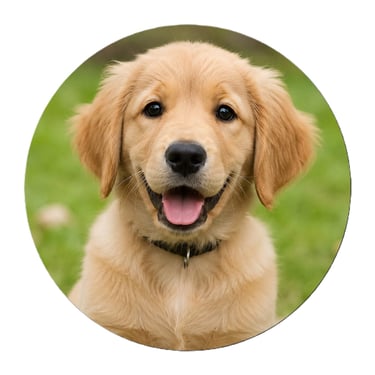
Why Does My Puppy Eat Everything? How to Stop It
Is your puppy eating everything in sight? Discover why puppies chew and swallow objects and simple proven tips to stop the behaviour before it becomes dangerous.
DOG BEHAVIOR
Pup Care and Training
6/8/20266 min read
Sticks. Rocks. Grass. Poop. Whatever was on the pavement. The thing you dropped for one second. The sock that went missing three weeks ago.
If your puppy seems to treat the world as a buffet you're not alone. And you haven't done anything wrong. This is one of the common experiences of having a puppy and it drives almost every new dog owner a little crazy.
The good news? It's normal. It's something you can manage.. With the right approach it gets a lot better.
Here's why its happening and what you can do about it.
Why Do Puppies Eat Everything?
Your puppy isn't trying to give you a heart attack. They come by this behavior naturally. Here's whats actually going on:
Dogs are scavengers. It's in their DNA. For thousands of years before they were domesticated dogs survived by sniffing out and consuming whatever they could find. That instinct doesn't disappear just because they live in your house now. When your puppy picks up something off the pavement they're following their instincts. Not being deliberately naughty.
Their mouth is how they explore the world. Puppies don't have hands. Their mouth is their tool for investigating anything new or interesting. Picking something up mouthing it chewing it. That's how your puppy gathers information. It's curiosity, not chaos.
They're teething. Between three and six months your puppies baby teeth fall out. Adult teeth come through. This process is uncomfortable and chewing provides relief. Everything gets chewed during this period. Including things you'd rather they left alone.
They're bored or under-stimulated. A puppy who doesn't have mental and physical stimulation will find their own entertainment. Chewing, scavenging and eating objects fills the gap. It's a coping mechanism.
It got a reaction. You chased them around the garden for five minutes trying to get the sock back. That was exciting. Your puppy has now learned that picking up forbidden objects triggers the entertaining game of the day. They will do it again.
Pica. In some cases. Rarer than the above but worth knowing about. Puppies develop a condition called pica, where they compulsively eat -food items. If your puppy is consistently eating amounts of dirt, rocks, fabric or other non-food objects and the behavior doesn't reduce with training and enrichment speak to your vet to rule out nutritional deficiencies or underlying health issues.
What's Dangerous
Most of what puppies pick up is unpleasant rather than genuinely dangerous.. Some things are a real risk and its worth knowing what to look out for.
Genuinely dangerous items include:
objects that can cause choking or intestinal blockage. Coins, small toys, pebbles, bottle caps
Toxic plants. Many common garden plants are poisonous to dogs, including daffodil bulbs, foxglove and yew
Chemicals and fertilizers on grass or soil
bones. These splinter and can cause serious internal damage
Rat or slug poison. Often found in gardens and parks
Food waste containing chocolate, grapes, raisins, onions or xylitol
Poop from animals. Which can carry parasites
If your puppy has swallowed something potentially toxic or is showing signs of distress, vomiting or lethargy after eating something unknown contact your vet immediately.
Two Commands That Will Change Everything
Before anything there are two commands every puppy needs. And the sooner you teach them the safer your puppy will be for the rest of their life.
"Leave It"
"Leave it" tells your puppy to ignore something to not even pick it up. This is your prevention command.
How to teach it:
Place a treat in your fist and hold it in front of your puppy. They'll sniff, paw. Try to get it. The moment they back away or look up at you. Slightly. Say "yes!". Reward them from your other hand.
Repeat this until your puppy pulls back reliably when you close your fist.
Then move to placing the treat on the floor and covering it with your foot.
Then practice with real-world objects on walks.
The key: once you say "leave it " the item is off-limits. Never let your puppy get the thing they were told to leave. That instantly teaches them the command is optional.
"Drop It"
"Drop it" is for when your puppy has something in their mouth. This is your emergency command.
How to teach it:
Give your puppy a toy to hold.
Show them a high-value treat.
The moment they open their mouth to take the treat say "drop it" and reward immediately.
Pick the toy back up. Repeat.
Important: never snatch things from your puppies mouth. Chase them to get something back. Chasing makes it a game. Snatching builds resource guarding. Trade calmly. "Drop it " reward, give the item back or redirect to something
Practice "drop it" daily until its completely reliable. Then practice it in distracting environments. Then practice it when the item in their mouth is something they really want.
How to Stop Your Puppy Eating Everything: The Practical Approach
Commands are essential.. Commands alone aren't the full answer. Here's the complete approach that actually works:
. Supervise, Supervise, Supervise
This is the foundation of everything. A puppy you can't see is a puppy who is finding things to eat. When your puppy is outside you need to be there with them paying attention.
. Puppy-Proof Your Environment
Walk every room of your home and your garden from your puppies perspective. Low and thorough.. Secure:
Shoes, socks and clothing left on the floor
Children toys with parts
Electrical cables and chargers
Anything in the bins
Toxic plants. Both indoors and in the garden
Chemicals, fertilizers and cleaning products
Anything small to be swallowed
Keep Walks on a Short Lead While You Build Skills
When your puppy is still learning "leave it" and cannot yet be trusted to leave things on the ground keep them on a shorter lead during walks. This gives you control to redirect before they get their mouth on something.
Redirect Onto Appropriate Items
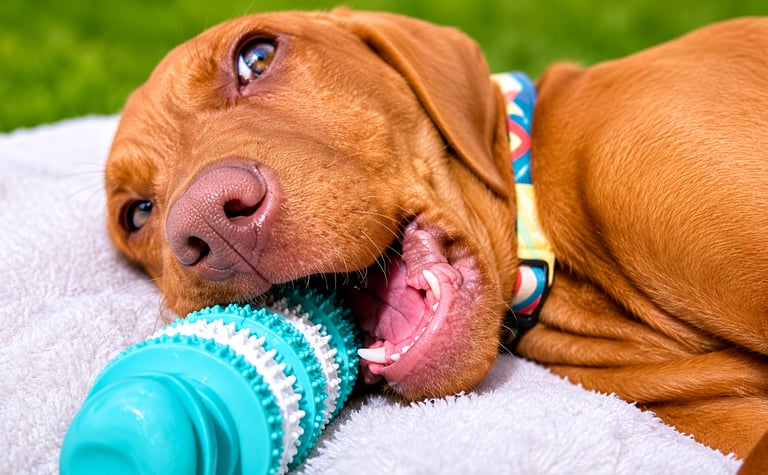
Your puppy needs to chew. Make sure your puppy always has access to chew items. Safe durable chew toys, long-lasting treats.
Don't Make It a Game
If your puppy steals something and you chase them around the garden trying to get it back. That's the fun they've had all day. They will do it again. Stay calm. Don't chase. Don't shout.
Increase Mental and Physical Stimulation
A tired satisfied puppy chews and scavenges far less, than a bored under-stimulated one. Give your puppy physical exercise, mental enrichment and social interaction.
Stay Consistent
This one is non-negotiable. If "leave it" works on Mondays but gets ignored on Wednesdays because you weren't paying attention the command loses its reliability.
Will My Puppy Grow Out of This?
Mostly. Yes. The strength of the "eat everything" phase is strongly linked to teething and the curious nature of puppyhood. By six to nine months most puppies are less picky about what goes in their mouth.
Mostly" is doing some work here. Dogs are scavengers and some degree of sniffing out and trying to eat things they find will stay with them their whole lives. The goal isn't to stop the behaviour it's to build a reliable "leave it " manage their surroundings and redirect their instinct to eat things onto suitable outlets.
The right mix of managing their environment, training keeping them engaged and being consistent gets you a dog who can walk past a discarded sandwich on the sidewalk without trying to grab it. That's a goal. And its one worth working toward from day one.
When to See the Vet
scavenging and chewing is normal puppy behaviour.. Contact your vet if:
Your puppy has swallowed something that could cause a blockage. Symptoms include vomiting, loss of appetite, lethargy, tummy pain or straining to poop
You suspect they've eaten something
Your puppy is compulsively eating -food items (dirt, rocks, fabric) despite enrichment and training. This could mean they have pica or a nutritional deficiency
You notice any changes in their stools significant lethargy or signs of pain
When in doubt call. It's always better to check.
Final Thoughts
Your puppy eating everything isn't a flaw, a training failure or a sign of things to come. It's a puppy doing what puppies do. Exploring the world with their mouth following natural scavenging instincts and figuring out what the rules are.
Your job is to manage their surroundings so they can't hurt themselves teach "leave it" and "drop it" until they're really reliable redirect their chewing drive onto items and stay consistent.
Do those things and this phase. Which feels endless now. Passes faster than you expect.
Frequently Asked Questions
Why does my puppy eat grass and dirt?
Eating grass is very common in dogs and usually harmless. Many dogs do it out of habit, boredom. Because they like the texture. Eating amounts of dirt more consistently could mean a mineral deficiency or pica. Worth mentioning to your vet if its a regular behaviour.
Is it normal for puppies to eat their poop?
Eating poop is surprisingly common in puppies. Usually goes away on its own by around nine months. Keep the garden clean use "leave it" when you catch them and speak to your vet if it persists or if they're eating animals stools.
My puppy ate a sock. Should I be worried?
Small pieces of fabric can usually pass through. A whole sock or large piece of fabric is a real blockage risk. If your puppy ate a sock and is showing signs of vomiting not eating, lethargy or seems uncomfortable. Call your vet.
How do I teach "leave it"
Start with treats in a fist. The moment your puppy backs away reward from the hand. Build up gradually over days to uncovered items on the floor then objects, then real-world distractions on walks. Practice daily in sessions.
When will my puppy stop eating everything?
The peak of the "eat everything" phase is usually, between eight weeks and six months closely linked to teething and development. Most puppies become more selective after six to nine months. With training and enrichment the behaviour gets much better.
Contact
We're here to help with puppy questions.
© 2025. All rights reserved.